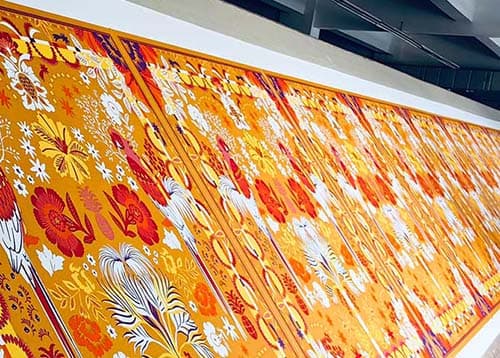
Our process
From fabric to finished piece
Pigment screen printing, the way we've always done it: by hand, colour by colour, order after order.
Before the first screen
The brief, read twice
Every order starts the same way: unprinted fabric arrives at the factory along with the client's own program for it, written down on a slip of paper or simply talked through on the phone, naming the design, the colour, and exactly which part of the piece, a top, a dupatta, a pallu, carries which pattern.
Before a screen is ever cut, the workshop reads that brief a second time, the way a tailor reads a pattern: which design sits where, which shade belongs to which component, and what has to line up exactly once the finished pieces come back together as a set.
Getting ready
A screen for every colour
There is no shortcut at this stage. Every colour in a design gets its own screen, so a single pattern, three petals and a border, say, can mean half a dozen separate screens, each one exposed, checked, and set aside in the order it will be pulled.
Alongside them, the pigment itself is mixed fresh, by eye and by hand, matched to the shade on the client's program rather than to a fixed recipe, and checked against a test strip before a single screen touches real fabric. The colour on the swatch and the colour on the finished piece have to be the same colour, not just close to it.
On the table
Metres and metres, pinned flat
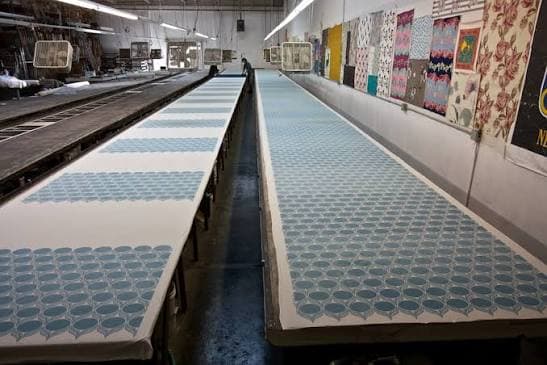
Thaans and cut pieces are stretched the length of the print table and pinned down edge to edge, because nothing about what comes next forgives a fold or a shift once the first screen comes down. A single run can hold a piece fifty, sixty, eighty metres long, laid out in one unbroken length.
The work itself
Colour by colour, by hand
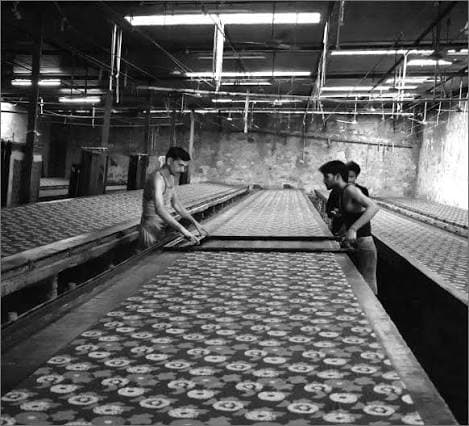
Each screen is pulled in turn, the squeegee carrying pigment through the mesh in one even stroke, the karigar's whole arm behind it. The same person pulls the same screen down the same table, piece after piece, because consistency here comes from one set of hands repeating a motion, not from a machine repeating an instruction.
Every pass has to land exactly where the one before it did. Get the register wrong by even a shade and the piece shows it, an edge that was meant to meet clean, so the next screen never comes down until the last one has dried enough to take it.
After the squeegee
Curing it into the cloth
Once printed, the pigment has to be cured into the fabric so it holds for good, sitting on the surface rather than soaking through it the way a dye would. That is part of what gives a finished piece its depth, colour that sits slightly raised off the weave instead of vanishing into it.
Before it leaves
Checked by hand, counted out
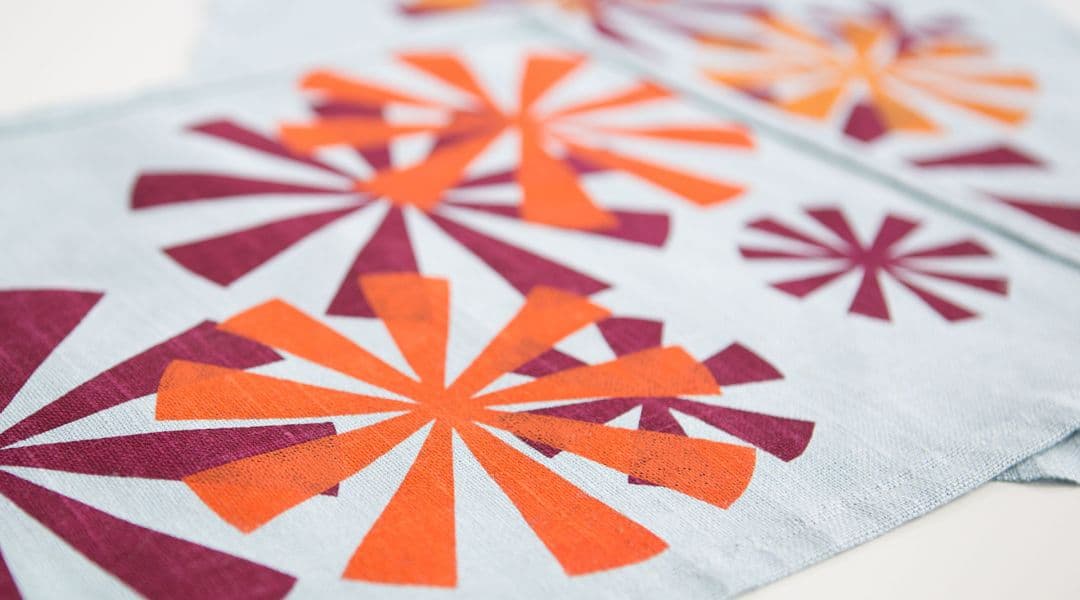
Every piece is checked by hand before it's folded: register, colour, finish, so a flaw is caught on the factory floor and never on somebody else's cutting table.
The finished goods are then packed and sent back out exactly the way they came in: counted, listed on Ajanta's own delivery challan, and signed for at handover, so both sides know precisely what left and what arrived.